Trump says US representatives heading to Islamabad, will be ‘there tomorrow evening for negotiations’ with Iran – World
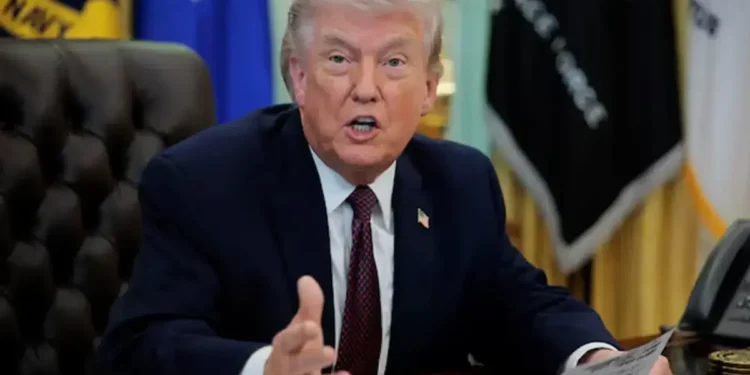
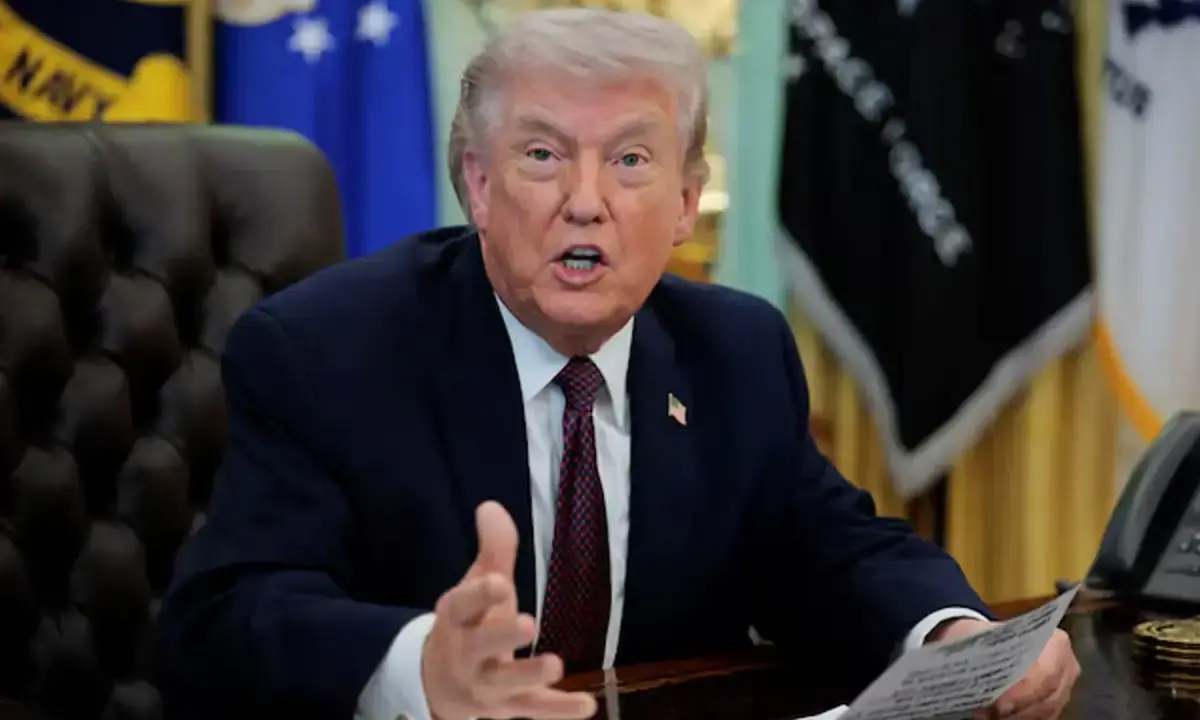
President Donald Trump announced on Sunday that representatives from Washington were heading to Islamabad and they would be “there tomorrow evening for negotiations” with Iran.
The US president made the announcement in a Truth Social post, where he also insisted that Washington was offering Tehran “a very fair and reasonable” deal.
“And I hope they take it because, if they don’t, the United States is going to knock out every single Power Plant, and every single Bridge, in Iran,” he warned. “NO MORE MR. NICE GUY! They’ll come down fast, they’ll come down easy and, if they don’t take the DEAL, it will be my Honour to do what has to be done, which should have been done to Iran, by other Presidents, for the last 47 years. IT’S TIME FOR THE IRAN KILLING MACHINE TO END!”
US media outlets reported, citing the White House spokesperson and officials, that Vice President JD Vance would lead the American delegation, and that Trump’s envoy Steve Kushner and the president’s son-in-law Jared Kushner would also be part of the negotiating team.
However, earlier, an ABC News journalist and MS Now reported that Vance would not go.
While there was no official confirmation from the Iranian side, the official IRNA news agency reported that Tehran had rejected the prospect of taking part in the second round of the talks with the US.
“Iran stated that its absence from the second round of talks stems from what it called Washington’s excessive demands, unrealistic expectations, constant shifts in stance, repeated contradictions, and the ongoing naval blockade, which it considers a breach of the ceasefire,” the agency said in a post on X.
However, preceding reports by Iran’s Fars and Tasnim news agencies, quoting anonymous sources, said Tehran had yet to decide whether it would participate and that “the overall atmosphere cannot be assessed as very positive”.
Fars cited one source as saying that the lifting of a US blockade on Iranian ports was a precondition for talks.
The first round of historic direct US-Iran talks, held in Islamabad on April 11 and 12, had ended without an agreement, but also without a breakdown.
The talks were held as a Pakistan-brokered two-week ceasefire between Washington and Tehran remained in effect. The ceasefire, which is set to end on April 22, paused hostilities that began with the US-Israeli strikes on Iran on February 28.
Pakistan’s civil and military leadership has been engaged in feverish diplomacy, seeking to bring the US and Iran back to the negotiating table after the first round of talks yielded no result.
On Wednesday, the White House said the US was discussing a possible second round of peace talks with Iran in Islamabad and was optimistic about reaching a deal. And a day later, Trump said that if a deal with Iran to end the war was reached and signed in Islamabad, he might go there.
Despite this, Washington and Tehran were seen in a stand-off over the closure of the Strait of Hormuz on Saturday. Iran again closed the strait — which was briefly reopened after a 10-day ceasefire was agreed between Lebanon and Israel — as the US continued its blockade of Iranian ports in the Persian Gulf and Gulf of Oman. Tehran said it would not reopen the maritime trade route until the US ended its blockade of Iranian ports.
The closure of the strait has trapped hundreds of ships in the Gulf and driven up the price of oil and the costs of shipping goods, with captains avoiding the region for fear of attacks or mines.
Target chastises Iran over Hormuz closure
In his Truth Social Post on Sunday, Trump alleged that Iran had “decided to fire bullets yesterday in the Strait of Hormuz — A Total Violation of our Ceasefire Agreement! Many of them were aimed at a French Ship, and a Freighter from the United Kingdom. That wasn’t nice, was it?”
He recalled that Iran recently announced that they were closing the Strait of Hormuz, which he said was “strange, because our BLOCKADE has already closed it”.
“They’re helping us without knowing, and they are the ones that lose with the closed passage, $500 Million Dollars a day! The United States loses nothing. In fact, many Ships are headed, right now, to the US, Texas, Louisiana, and Alaska, to load up, compliments of the IRGC, always wanting to be ‘the tough guy!’,” he insisted.
Iran says US naval blockade a ceasefire violation
Meanwhile, Iran’s foreign ministry spokesperson Esmaeil Baqaei posted on X that the US naval blockade on Iranian ports was a violation of the ceasefire as well as an “unlawful and criminal” act.
“The United States’ so-called ‘blockade’ of Iran’s ports or coastline is not only a violation of Pakistani-mediated ceasefire but also both unlawful and criminal,” he said.
Baqaei added, “By deliberately inflicting collective punishment on the Iranian population, it amounts to a war crime and crime against humanity.”
It has been reported that the first round of US-Iran talks remained inconclusive, with unrestricted navigation through the Strait of Hormuz being one of the issues at the core of the impasse.
The US has also sought long-term commitments on Iran’s nuclear programme, including constraints on enrichment and safeguards against weaponisation.
On Saturday, Iran’s top national security body said the country was reviewing “new proposals” received from the United States, even as it warned that its negotiators would cut no compromises with Washington.
“In recent days, with the presence of the commander of the Pakistani army in Tehran as an intermediary and mediator in the negotiations, new proposals have been put forward by the Americans, which the Islamic Republic of Iran is currently reviewing and has not yet responded to,” the Supreme National Security Council said in a statement.
It went on to add that Iran’s negotiating delegation “will not make even the slightest compromise, retreat or leniency, and will defend with all its strength the interests of the Iranian nation”.
Meanwhile, Iran’s Parliamentary Speaker Mohammad Bagher Ghalibaf said progress had been made in negotiations with the United States to end the war, but added the sides were still far from an agreement.
“We are still far from the final discussion,” Ghalibaf, who is also one of Iran’s negotiators, said in a national televised address, adding, “we made progress in the negotiations, but there are many gaps and some fundamental points remain”.