War Diary Day 30: Multifront attrition deepens, strategic picture getting complicated for US and Israel – World
The conflict is now spilling outward due to Iran’s sustained resilience, the coordinated actions of its regional proxies, and growing domestic unrest in Bahrain.
By the 30th day of the US-Israel war on Iran, it has become increasingly clear that the conflict has crossed a critical threshold and is no longer confined to Iranian territory.
The conflict is now spilling outward due to Iran’s sustained resilience, the coordinated actions of its regional proxies, and growing domestic unrest in Bahrain. These factors are effectively eroding the tactical gains achieved by US and Israeli forces.
Inside Iran, US and Israeli strikes over the past 24 hours continued to target a mix of military, industrial, and increasingly civilian infrastructure, with reported hits on residential blocks in Tehran, academic institutions, aerospace facilities, energy sites and a water filtration plant in Khuzestan, alongside continued pressure on the Bushehr nuclear complex.
This expanding target set tells about a shift in the US-Israel alliance’s war focus toward degrading Iran’s broader scientific and industrial base rather than only its military capabilities. Civilian casualties are becoming more visible, and Iranian narratives are framing this pattern as an attempt at Iran’s long-term “de-development” and economic and scientific degradation.
Despite this pressure, Iran’s defensive and retaliatory posture has remained intact.
The reported shoot-down of a US MQ-9 Reaper drone during past 24 hours and continued missile and drone strikes on Israeli electronic warfare and radar installations in Haifa, as well as fuel-related targets near Ben Gurion Airport, proves that despite all the coalition pressure on Iran, it still has a functioning and adaptive command structure and that its decentralised “mosaic” system is absorbing shocks without loss of operational coherence.
The proxy front
On Israel and its northern front, pressure has been sustained through a combination of direct Iranian strikes and Hezbollah action.
Hezbollah continues to engage Israeli forces along the Lebanon border through a mix of ground resistance and rocket fire, thereby inflicting high cost on Israel and preventing any stabilisation of the front.
At the same time, Yemen’s Houthi movement has stepped up involvement with repeated missile and drone launches toward Israel. These attacks are basically a practical signal from Houthis about their readiness to widen the conflict if required, debunking speculations about it.
Across the wider Gulf and proxy theatres, the conflict has deepened both geographically and strategically. Actions by Iran and its aligned groups have targeted US and allied assets across multiple nodes, including drone attacks over Erbil, continued pressure from Iraqi militias, and strikes affecting key economic installations in the United Arab Emirates, including major aluminium production infrastructure.
The Iranian claims of attacks on US positions in Kuwait and maritime targets near Oman largely fit into a broader pattern of probing and disrupting US logistics and forward presence.
Unrest in Bahrain
A notable new dimension has emerged in Bahrain, where the internal situation has deteriorated sharply following the death in custody of a detainee associated with anti-war protests. The resulting demonstrations, drawing participation across sectarian lines, mark a rare moment of unified dissent in Bahrain, which importantly highlights the domestic vulnerabilities of Gulf states aligned with the US position.
The unrest in Bahrain, if sustained, would complicate regional coalition dynamics.
Signs of Washington moving beyond air-centric campaign
On the military balance, the US force’s posture is keeping escalation options open with additional troop deployments and preparations for potential ground operations. This suggests that Washington is planning to move beyond an air-centric campaign toward a broader set of contingencies. However, surprisingly, this expansion is taking place against a backdrop of rising economic and political costs, including market volatility and growing scrutiny of the war’s objectives and trajectory.
Diplomatically, there are few signs of meaningful movement. Messaging from Washington remains mixed between signalling openness to talks and continuing military pressure, while Tehran has shown no indication of stepping back from its core positions and has repeatedly told external interlocutors that it does not trust the US.
At the end of Day 30, I believe Iranian capacity to impose costs across multiple fronts, combined with proxy synchronisation and emerging instability in allied Gulf states, is complicating the strategic picture for the US and Israel. In the absence of a credible political off-ramp, the conflict is set to continue as a prolonged regional conflict with mounting economic and human costs.
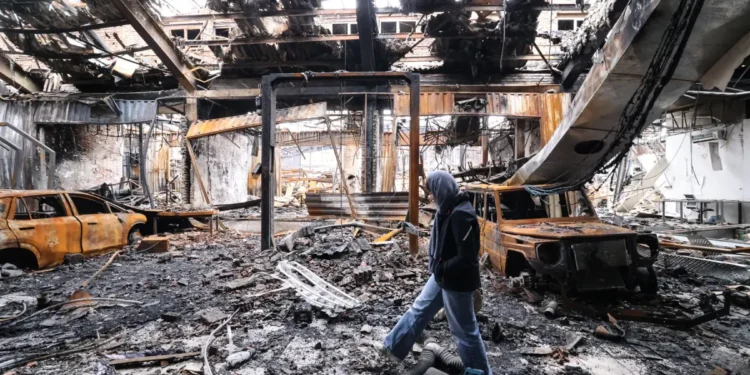
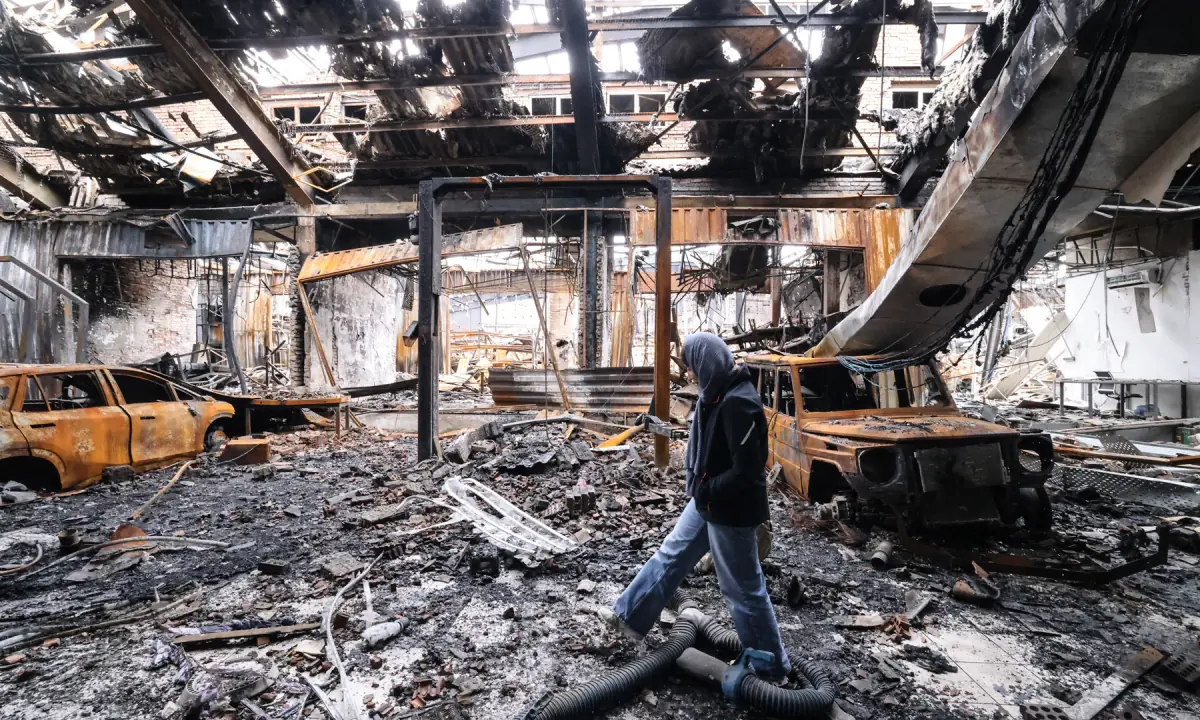
Header image: A journalist walks past the wreckage of vehicles during the visit of a car service centre in eastern Tehran that was hit by a missile strike, on March 28, 2026. — AFP