War Diary Day 24: Trump’s tactical pause buys time, not resolution – World
On the 24th day of the US-Israeli war on Iran, President Donald Trump’s decision to defer planned strikes on Iran’s power plants and energy infrastructure by five days introduced a tactical pause in an otherwise escalating conflict, essentially extending the 48-hour ultimatum into a more uncertain holding phase.
The shift from threats of “obliteration” to claims of “productive conversations” appeared less the result of any Iranian concession and more a unilateral recalibration by Washington.
Tehran has denied any real engagement and maintained its position that any strike on its energy infrastructure would trigger wide retaliation across US- and Israeli-linked targets in the Gulf, including energy, desalination and critical systems, alongside a potential full closure of the Strait of Hormuz.
The pause, therefore, reflects a delay in decision rather than a change in positions.
Pressures driving the adjustment
Multiple pressures appear to have driven this adjustment. The economic cost of the war is rising sharply, with energy markets already strained and domestic political concerns mounting in the US. Inflation projections had been revised upward, fuel prices were climbing, and the fiscal burden of operations was becoming more visible.
At the same time, allied support has remained limited in operational terms, with statements about coordination not translating into meaningful combat deployments.
At the same time, Iran’s continued strikes on regional radar and surveillance systems embarrassingly exposed vulnerabilities in early warning coverage, which added to the operational difficulties.
Military purpose
The pause also serves a parallel military purpose. The ongoing movements of US personnel and assets toward regional bases, alongside the forward positioning of amphibious groups, point to continuing preparations for targeted options, including possible coastal operations — seizure of Iranian islands — or actions for securing maritime routes.
Iranian assessments point to a US focus on southern coastal positions rather than high-risk seizure of Kharg Island, though the latter remains part of contingency planning.
In this sense, the five-day window is both a buffer against immediate escalation and a preparatory period should coercive options be resumed.
War continues on ground
On the ground, however, the war has not paused. The US decision applied narrowly to Iranian power and major energy infrastructure, while Israeli operations inside Iran and in southern Lebanon continued. Strikes on coastal missile sites near Kharg and the Tunb islands persisted, and ground fighting south of the Litani River intensified.
Iran has, meanwhile, maintained missile pressure on Israel, shifting toward heavier payloads and more selective targeting, while continuing and expanding strikes on Gulf targets.
The damage to LNG facilities in Qatar and attacks on installations across Saudi Arabia, the UAE and Bahrain are just reminders that the energy dimension of the war remains active despite the temporary pause by the US.
The Strait of Hormuz, during the past 24 hours, continued to function under Iranian control with passage remaining selective and neutral tankers allowed under monitored conditions, while US-Israeli coalition-linked vessels faced restrictions or were turned back. This approach allowed Tehran to sustain pressure on global supply chains without triggering a full shutdown.
Street sentiment
Across the region, the street sentiment reflected caution rather than confidence. In Israel, the US postponement was met with a mix of relief and scepticism, with growing fatigue due to sustained missile attacks by Iran and Hezbollah and battlefield losses. In Arab capitals, the move was seen as a tactical delay rather than a shift in direction. The concern in Arab streets remained focused on the risk of wider infrastructure disruption if escalation resumes, as Gulf states are particularly exposed.
Proxy fronts remained active despite limited signals of restraint. Hezbollah has sustained a high tempo of operations in southern Lebanon, with continued pressure on Israeli forces, while Iraqi groups have indicated a conditional 24-hour pause for the withdrawal of Nato troops from the Iraqi mainland.
Diplomatically, the pause delivered a narrow window but little clarity. Some partners welcomed the breathing space, while regional actors continued to urge restraint. It is, however, important that Iran’s own framing of a potential end to the war has, all along, remained expansive, linking any settlement to broader regional arrangements, payment of reparations, and a new framework for the Strait of Hormuz. There was no indication of movement toward these positions.
By the end of Day 24, the five-day pause has altered the tempo but not the trajectory of the conflict. Trump’s announcement at a minimum reflected a recognition in Washington that escalation carries consequences that are difficult to control as Tehran refuses to yield.
One can’t say about the future trajectory of the conflict, but for now, the war remains suspended between restraint and renewed escalation.
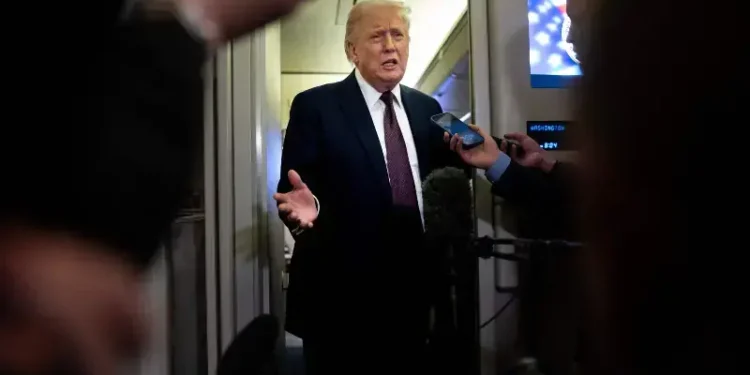
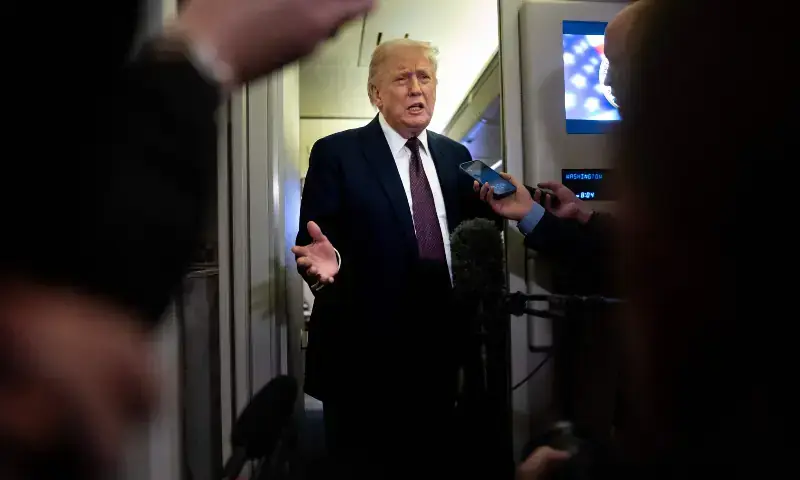
Header image: US President Donald Trump speaks to members of the media onboard Air Force One on March 15, 2026 while en route to Joint Base Andrews, Maryland from West Palm Beach Florida. — AFP/ File