Nuclear talks between US and Iran slated for Friday: officials – World
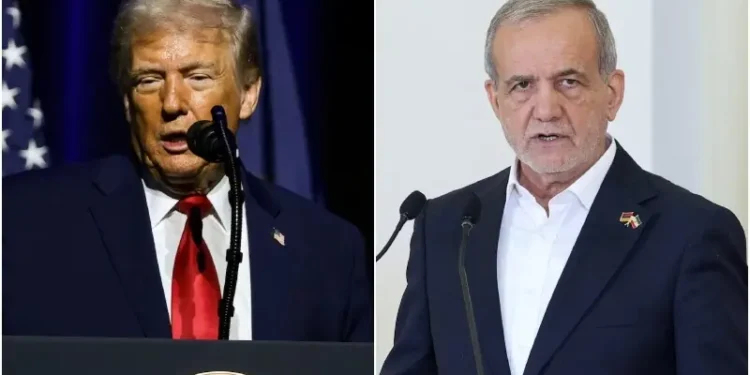
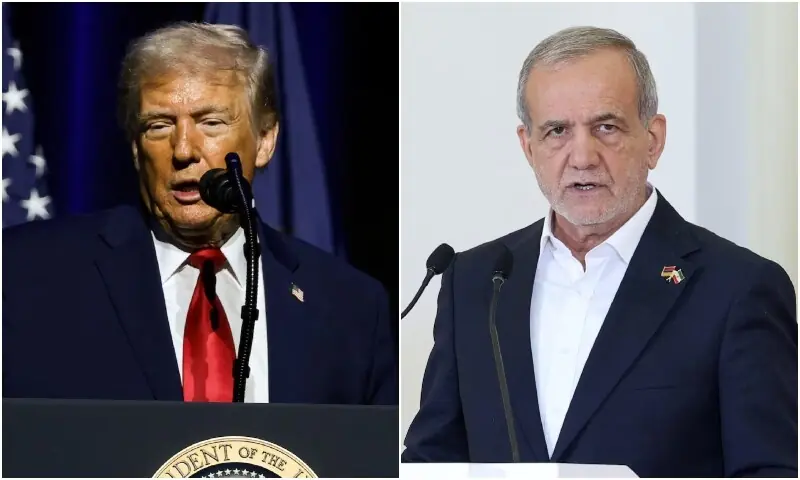
Iran and the United States will resume nuclear talks on Friday in Turkiye, Iranian and US officials told Reuters on Monday, while a regional diplomat said representatives from countries such as Saudi Arabia and Egypt would participate.
US Special Envoy Steve Witkoff and Iranian Foreign Minister Abbas Araqchi will meet in Istanbul in an effort to revive diplomacy over a long-running dispute about Iran’s nuclear programme and dispel fears of a new regional war.
Turkiye and other regional allies have sought de-escalation.
“Qatar, Saudi Arabia, UAE and Egypt, as well as some other countries, will attend the Istanbul meeting. There will be bilateral, trilateral and other meetings,” the diplomat said.
Earlier today, the Iranian news agency Fars reported that President Masoud Pezeshkian ordered the start of nuclear talks with Washington.
“President Pezeshkian has ordered the initiation of nuclear negotiations with the United States,” the agency reported, citing an unnamed government source.
“The source said Iran and the US will hold talks strictly within the framework of the nuclear issue,” Fars added.
The report was also carried by the government newspaper Iran and the reformist daily Shargh.
Iran said it was working on a method and framework for negotiations that would be ready in the coming days, with messages between the two sides relayed through regional players.
“Several points have been addressed and we are examining and finalising the details of each stage in the diplomatic process, which we hope to conclude in the coming days,” foreign ministry spokesman Esmaeil Baqaei said, without giving details on the content of any negotiations.
US Naval buildup near Iran
Tensions are running high amid a US naval buildup near Iran, following a violent crackdown against anti-government demonstrations last month, the deadliest domestic unrest in Iran since its 1979 revolution.
US President Donald Trump, who stopped short of carrying out threats to intervene during the crackdown, has since demanded that Tehran make nuclear concessions and sent a flotilla to its coast.
He said last week Iran was “seriously talking”, while Tehran’s top security official, Ali Larijani, said arrangements for negotiations were underway.
Iranian sources told Reuters last week that Trump had demanded three conditions for resumption of talks: zero enrichment of uranium in Iran, limits on Tehran’s ballistic missile programme and ending its support for regional proxies.
Iran has long rejected all three demands as unacceptable infringements of its sovereignty, but two Iranian officials told Reuters its clerical rulers saw the ballistic missile programme, rather than uranium enrichment, as the bigger obstacle.
Preparations for potential US-Iran talks
Baqaei said Tehran was considering “the various dimensions and aspects of the talks”, adding that “time is of the essence for Iran as it wants the lifting of unjust sanctions sooner”.
A Turkish ruling party official told Reuters that Tehran and Washington had agreed to re-focus on diplomacy and possible talks this week, in a potential reprieve for potential US strikes.
Witkoff was expected to visit Israel to meet Prime Minister Benjamin Netanyahu and Israel’s military chief, two senior Israeli officials said separately on Monday.
Iranian Foreign Minister Abbas Araghchi was in Turkiye last week and held further calls with his Egyptian, Saudi and Turkish counterparts, he said on Telegram.
“President Trump said no nuclear weapons, and we fully agree. We fully agree with that. That could be a very good deal,” Araghchi told CNN on Sunday. “Of course, in return, we expect sanctions lifting. So, that deal is possible. Let’s not talk about impossible things.”
Baqaei said the rallying of neighbouring states around a diplomatic solution demonstrated a fear that any US attack would drag the region into conflict, echoing Iranian supreme leader Ayatollah Ali Khamenei, who warned on Sunday that a US attack would trigger a “regional war”.
‘Ball in Trump’s court’
The Iranian official said, “Diplomacy is ongoing. For talks to resume, Iran says there should not be preconditions and that it is ready to show flexibility on uranium enrichment, including handing over 400 kilogrammes of highly enriched uranium, accepting zero enrichment under a consortium arrangement as a solution”.
However, he added, for the start of talks, Tehran wanted US military assets moved away from Iran.
“Now the ball is in Trump’s court,” he said.
Satellite imagery shows repair work at Iranian sites
Tehran’s regional sway has been weakened by Israel’s attacks on Hamas in Gaza, Hezbollah in Lebanon, the Houthis in Yemen and militias in Iraq, as well as by the ousting of Iran’s close ally, former Syrian President Bashar al-Assad.
In June last year, the United States struck Iranian nuclear targets, joining in at the close of a 12-day Israeli bombing campaign. Since then, Tehran has said its uranium enrichment work has stopped.
Recent satellite imagery of two of the targeted sites, Isfahan and Natanz, appears to show some repair work since December, with new roofing over two previously destroyed buildings.
No other rebuilding was visible, according to the imagery provided by Planet Labs and reviewed by Reuters.
Washington-based think tank Institute for Science and International Security said satellite images from late January showed construction work on tunnel entrances at Isfahan that could “indicate a preparation for additional military strikes”, as was seen ahead of last year’s US raid.
It could also signal the movement of assets from other facilities, it added.
Nuclear talks standoff
After five rounds of talks that have stalled since May 2023, several hard-to-bridge issues remained between Tehran and Washington, including Iran’s insistence on maintaining uranium enrichment on its soil and refusal to ship abroad its entire existing stockpile of highly enriched uranium.
The UN nuclear watchdog has called on Iran repeatedly to say what happened to the highly enriched uranium stock since the June attacks.
Western countries fear Iran’s uranium enrichment could yield material for a warhead. Iran says its nuclear programme is only for electricity generation and other civilian uses.
The Iranian sources said Tehran could ship its highly enriched uranium abroad and pause enrichment in a deal that should also include the lifting of economic sanctions.
Ambassadors summoned
The supreme leader also likened the recent protests to a “coup” attempt.
Authorities have said the protests, which were sparked by economic strain and exploded in size and intensity over several days in early January, were “riots” inflamed by its arch foes, the United States and Israel.
Tehran has acknowledged thousands of deaths during the protests, and on Sunday, the presidency published the names of 2,986 people out of the 3,117 whom authorities said were killed in the unrest.
Authorities insist most were members of the security forces and innocent bystanders, attributing the violence to “terrorist acts”.