Agriculture: Anatomy of Pakistan’s potato crisis – Business
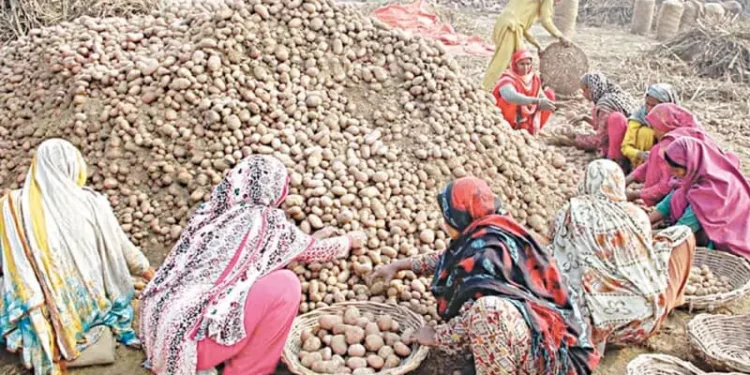
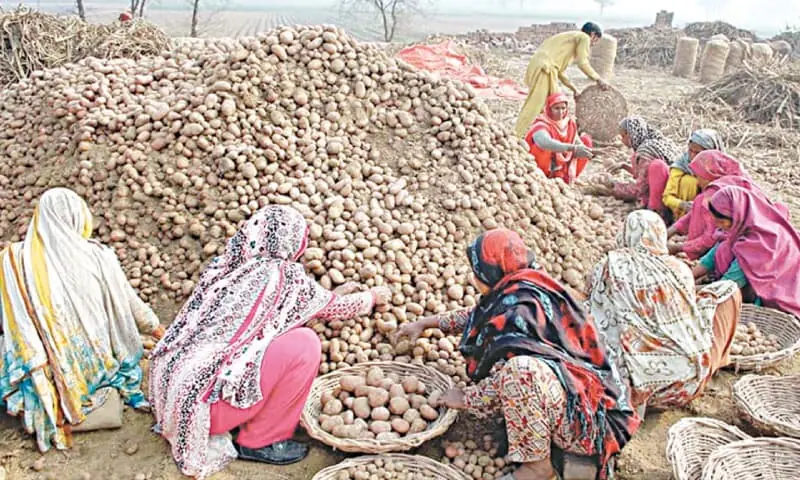
The ongoing potato crisis in Pakistan has drawn extensive media coverage over the past four weeks. Overproduction, coupled with the closure of the Afghanistan border since mid-October 2025, has caused a market crash, with supply exceeding demand to the point that potatoes are being used as livestock feed. So, the potato sector stands as a classic example of policy and planning failures in the agriculture sector that result in the waste of the country’s precious resources.
The current oversupply of potatoes stems largely from a bandwagon effect. In recent years, the crop yielded relatively higher profits, which induced farmers to increase its acreage significantly in both Punjab and Khyber Pakhtunkhwa. In 2024–25 alone, Pakistan’s potato area grew by 14 per cent, reaching 953,000 acres, with a production volume of 9.4 million tonnes. In Punjab, which produces roughly 95pc of the country’s potatoes, the area further expanded by 24pc in 2025–26.
In addition, the area under high-yielding potato varieties such as ‘Esmee’ has also increased over the past two years, further boosting production. Moreover, a bumper crop is being harvested this year due to favourable weather conditions.
As a result of these factors, potato production in the 2025–26 season is expected to reach 12m tonnes. Unfortunately, the government failed to anticipate this growing trend and did not expand exports accordingly in previous years. Meanwhile, domestic consumption and exports of potato value-added products have also lagged behind the surge in production.
While many believe that reopening the border could help the situation, production levels are so high that even if exports match prior levels, they would still be inadequate to fully absorb the surplus
Another factor adding pressure to the market is last year’s potato stocks held in cold storage facilities. Due to the border closure, these stocks — unlike in previous years — lasted until mid-January. Resultantly, the current crop has neither been exported nor absorbed by the domestic market in significant quantities so far. Consequently, over 80pc of the current harvest has yet to arrive in February and March.
While many farmers and exporters believe that reopening the border could help resolve the crisis, production levels are so exceptionally high that even if exports match those of previous years — 400,000 to 500,000 tonnes to Afghanistan and the Commonwealth of Independent States (CIS) countries, which account for nearly 50pc of Pakistan’s potatoes exports — they would still be inadequate to fully absorb the surplus. Nevertheless, such exports could provide partial relief and send a positive signal to the market.
Due to the market crash, farmers are facing massive financial losses at a time when they are already burdened with costly agricultural inputs. Ironically, both the Federal and Punjab governments have so far done nothing to address this crisis, except for a notification issued by the Ministry of Commerce on December 5, 2025, that permits the export of potatoes and kinnow to CIS countries via an alternative route through Iran. However, this route incurs higher freight charges, which negatively impact the cost competitiveness of Pakistani potatoes in these export markets.
Many believe that the government has several tools at its disposal to support farmers and potato exporters; however, the real issue lies in a lack of political commitment and the PMLN’s approach to the agriculture sector. This is evident from statements by senior party members on television talk shows, where a sharp decline in potato prices is presented as beneficial in easing the financial burden on urban consumers.
Similar arguments were advanced during the wheat harvesting season, when prices dropped to Rs1,800–2,200 per 40 kg. Statements at the time emphasised that lower wheat prices should be sustained to help reduce the cost of ‘roti’ for low-income households.
Undoubtedly, providing affordable food to the poor — particularly to pre-empt protests like those seen in some regional countries — is important, given Pakistan’s rising unemployment and declining purchasing power. However, this should not come at the expense of farmers and must be done through targeted subsidies. Forcing farmers to absorb losses without any government support or reopening the border is a short-sighted approach that will further undermine the agriculture sector, which is already on the brink of collapse due to flawed policies and soaring input costs.
Losses suffered by farmers will not only limit investment in upcoming crops, but are also likely to cause a sharp contraction in the area planted for the next potato crop in October. It must be recognised that, with the exception of wheat, which follows different dynamics, the acreage of most crops is highly sensitive to price fluctuations.
For instance, in 2025, the area under sesame in Punjab declined by a substantial 37 per cent — from 1.75m acres to 1.09m acres — within a single year, following a drop in prices from Rs16,500 per 40 kg (2023 crop) to around Rs11,000 (2024 crop). Therefore, the government’s short-term approach could come at a very high cost to both the country and consumers in the coming years.
To address this crisis, the government could incentivise exporters, processors, and stockists with interest-free loans to procure potatoes during the peak harvesting season and store them for year-round domestic consumption and exports up to December 2026.
Punjab alone has over 800 dedicated potato cold storage facilities with a combined capacity exceeding 3.5m tonnes, while other provinces also have a significant number of functional storage facilities. Moreover, being semi-perishable, potatoes are also stored in the field under a thick layer of rice straw, without any quality loss, until June 1, after which temperatures rise excessively. This approach would provide the government and exporters ample time to identify new export markets and expand in existing ones.
Furthermore, to support exporters and enhance their cost competitiveness, the government should also cover the additional freight charges incurred when using the Iran route for shipments to CIS countries. Only such interventions can achieve the two widely cherished national goals: ensuring food security and boosting agricultural exports.
Khalid Wattoo is a development professional and a farmer, and Dr Waqar Ahmad is a former Associate Professor at the University of Agriculture, Faisalabad
Published in Dawn, The Business and Finance Weekly, February 2nd, 2026