Explainer: How Iran will choose a new supreme leader after Khamenei
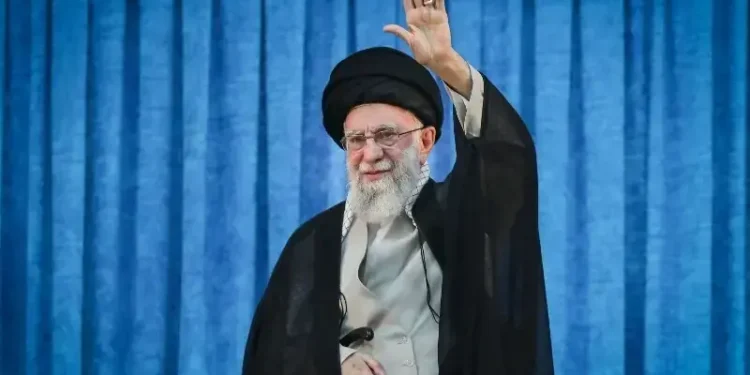
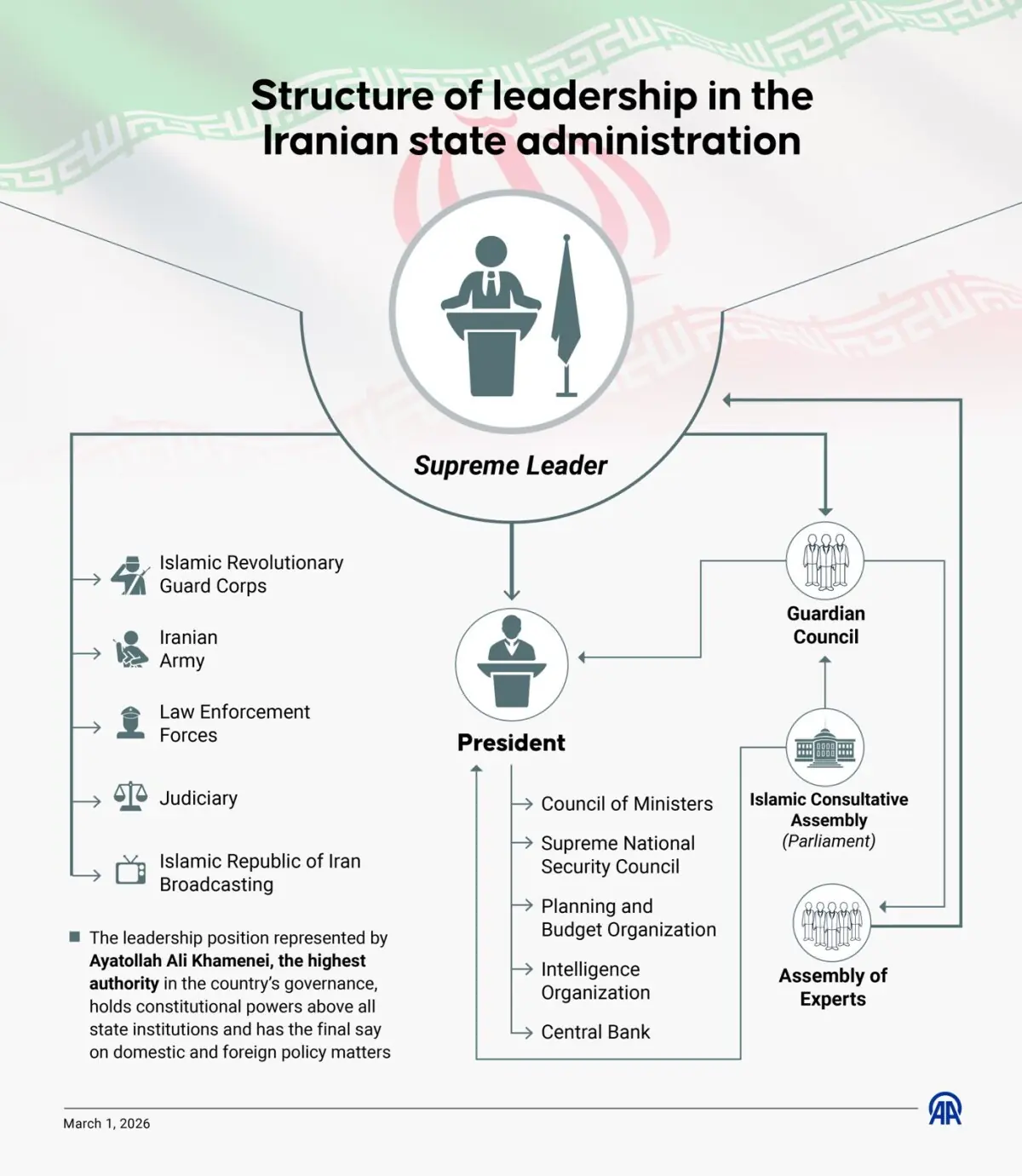
The assassination of Iran’s Supreme Leader Ayatollah Ali Khamenei in a joint US-Israeli strike has plunged the Islamic Republic into one of the most consequential political transitions since the 1979 revolution, triggering a swift constitutional process to select a new leader while the country grapples with regional escalation and internal uncertainty.
Khamenei, who dominated Iran’s political and religious landscape for nearly three decades, was assassinated early Saturday when his high-security residential compound in central Tehran was targeted. Several family members — including his daughter, son-in-law, daughter-in-law and a grandchild — were also killed in the strike.
The attack came as Israel and the US launched coordinated strikes across multiple Iranian cities, including Tehran, reportedly killing more than 200 people, according to health officials.
The escalation followed three rounds of indirect nuclear talks between Tehran and Washington — most recently in Geneva on Thursday — that failed to produce a breakthrough.
With Khamenei’s death, attention has shifted to the constitutional mechanism that will determine Iran’s next supreme leader. His office announced Sunday that during the transition, the president, the head of the judiciary and a cleric from the Guardian Council will jointly oversee the functions of the Supreme Leader’s office until a successor is chosen.
Role of the Assembly of Experts
At the centre of the succession process is the Assembly of Experts, an influential body tasked with selecting the Islamic Republic’s highest political and religious authority.
It is composed of 88 senior Islamic jurists and clerics elected by popular vote to serve eight-year terms. Its primary responsibility is to appoint a new supreme leader in the event of death, resignation or incapacity.
Since the 1979 revolution, Iran has had only two supreme leaders: Ayatollah Ruhollah Khomeini, the founder of the Islamic Republic, and Ali Khamenei, who succeeded him in 1989.
Article 107 of the Iranian Constitution states that “the determination of the Leader rests with the experts elected by the people,” underscoring the Assembly’s authority to vet and appoint the country’s top figure.
Beyond selecting the leader, the body is responsible for supervising his performance and holds the authority to dismiss him if he fails to fulfil his duties.
The assembly’s most recent elections were held in 2024, and it is currently headed by veteran cleric Mohammad Ali Movahedi Kermani.
How is the new leader chosen?
Potential candidates must first be vetted and approved by the Guardian Council, a constitutionally mandated body that screens candidates for key political positions. Only individuals who pass this vetting process are eligible for consideration.
Following Khomeini’s death on June 3, 1989, the Assembly of Experts convened to fill the leadership vacuum at a critical moment, as Iran was emerging from the eight-year war with Iraq. Khamenei was selected as successor, aided by Khomeini’s personal recommendation and an overwhelming vote during an emotionally charged session.
Under constitutional criteria, the supreme leader must be a qualified Islamic jurist, just and pious, well-versed in political and social affairs, and capable of leadership and sound judgment.
If no candidate fully meets all qualifications, the Assembly may select an individual demonstrating strong leadership ability and political competence.
After deliberations, members vote internally, and the candidate securing a majority of votes from those present is appointed.
Internal deliberations
Before a formal vote, the Assembly conducts private deliberations to assess multiple candidates based on religious scholarship, political experience and administrative competence.
These sessions are held behind closed doors, and details are rarely disclosed publicly. However, the 1989 session in which Khamenei was chosen was recorded, and footage shows him visibly emotional after his selection.
Experts note that succession planning is not improvised but the result of years of preparation. Committees within the Assembly evaluate potential candidates and maintain shortlists to ensure readiness.
After Khomeini’s death, several figures were considered before Khamenei ultimately secured 60 out of 74 votes. His experience as president, role during the Iran-Iraq war, and relatively young age at the time were decisive factors.
Potential successors
Unlike 1989, analysts say there is currently no single dominant figure widely viewed as capable of matching Khamenei’s combined political authority and religious standing.
Several names have circulated in non-Iranian media, including his son, Mojtaba Khamenei. However, assessments suggest he is not in the running, or at least not among the leading contenders.
Mojtaba’s wife was reportedly among those killed in the strike on Khamenei’s compound, and he was not present at the compound at the time.
Another figure mentioned in non-Iranian media is Hassan Khomeini, grandson of the Islamic Republic’s founder, but insiders say he is also not being considered.
Former President Ebrahim Raisi, who died in a helicopter crash in May 2024, had been viewed by many observers as a potential successor, but his death removed a prominent candidate from consideration.