Bangladesh’s BNP wins sweeping election majority, promises stability – World
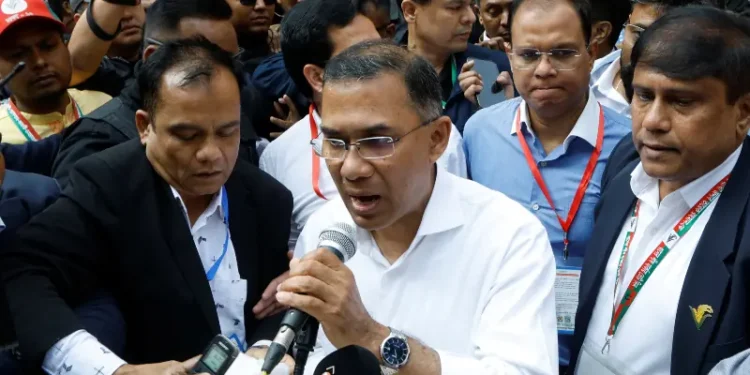
The Bangladesh Nationalist Party (BNP) won an overwhelming two-thirds majority on Friday in general elections, a result expected to bring stability after months of tumult following the ouster of former Prime Minister Sheikh Hasina in a Gen Z-led uprising in 2024.
Latest counts in a vote seen as the South Asian nation’s first truly competitive election in years gave the BNP and its allies at least 212 of the 299 seats up for grabs, domestic TV channels said.
The opposition Jamaat-i-Islami and its allies won 70 seats in the Jatiya Sangsad, or House of the Nation.
The Election Commission put the BNP at 181 seats, the Jamaat-i-Islami at 61 and others at 7, with full official results not expected before noon (11am PKT) on Friday.
The BNP, which returns to power after 20 years, thanked the people soon and called for special prayers on Friday for the nation and its people.
“Despite winning … by a large margin of votes, no celebratory procession or rally shall be organised,” the party said in a statement.
The National Citizen Party (NCP), led by youth activists who played a key role in toppling Hasina and was a part of the Jamaat-led alliance, won just five of the 30 seats it contested.
A clear outcome had been seen as key for stability in the Muslim-majority nation of 175 million after months of deadly anti-Hasina unrest disrupted everyday life and industries such as garments, in the export of which Bangladesh is No.2 globally.
“A strong majority gives BNP the parliamentary strength to pass reforms efficiently and avoid legislative paralysis. That alone can create short-term political stability,” Selim Raihan, an economics professor at the University of Dhaka, told Reuters.
BNP leader Tarique Rahman is widely expected to be sworn in as prime minister. The son of the party’s founder, former president Ziaur Rahman, he returned in December to the capital, Dhaka, from 18 years abroad.
In its manifesto, the BNP promised to prioritise job creation, protect low-income and marginal households and ensure fair prices to farmers.
“If the factories run regularly and we get our wages on time, thats what matters to us. I just want the BNP government to bring back stability so more orders come to Bangladesh and we can survive,” Josna Begum, 28, a garment worker and mother of two, told Reuters after the results.
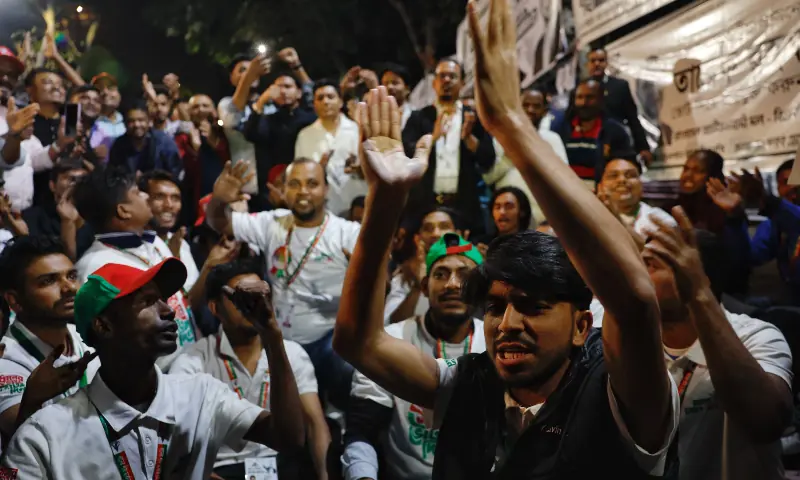
BNP supporters celebrate overnight
The Islamist Jamaat-i-Islami conceded defeat late on Thursday night once trends became clear, but said in a statement on Friday that it was “not satisfied” with the process and asked its followers to stay patient.
Now in exile in New Delhi, Hasina long dominated Bangladesh politics along with Rahman’s mother, Khaleda Zia, while his father was a leading independence figure who ruled from 1977 to 1981 before he was assassinated.
The BNP win with more than 200 seats is one of its biggest, surpassing its 2001 victory with 193, although Hasina’s Awami League, which ruled for 15 years and was barred from contesting this time, secured a bigger tally of 230 in 2008.
But elections of other years were boycotted by one of the main parties or were contentious.
Overnight, throngs of supporters cheered and shouted slogans at the BNP headquarters in Dhaka as the scale of the party’s landslide became clear.
Turnout exceeded the 42 per cent of the last election in 2024, with media nearly 60pc of registered voters participated in the election on Thursday.
More than 2,000 candidates, many independents among them, were on the ballot, which featured a record number of at least 50 parties. Voting in one constituency was postponed after a candidate died.
Broadcaster Jamuna TV said more than 2 million voters chose “Yes”, while more than 850,000 said “No” in a referendum on constitutional reforms held alongside the election, but there was no official word on the outcome.
The changes include two-term limits for prime ministers and stronger judicial independence and women’s representation while providing for neutral interim governments during election periods, and setting up a second house of the 300-seat parliament.
President, PM felicitate BNP on election win
President Asif Ali Zardari and Prime Minister Shehbaz Sharif on Friday extended their felicitations to the Bangladesh Nationalist Party (BNP) and its leader, Rahman, on securing a landslide majority in the national elections and receiving the mandate to form the next government.
According to the Presidency, the president congratulated the people of Bangladesh on the successful conduct of the polls across 299 seats with the participation of over 127 million registered voters.
Reaffirming Pakistan’s support for the sovereignty and democratic aspirations of Bangladesh, the president said Pakistan looks forward to working with the new government to strengthen cooperation in trade, defence, cultural exchanges, and regional forums.
President Zardari said the elections in Bangladesh mark an opportunity for South Asia to move beyond past phases in which regional cooperation, including within SAARC, was held hostage by India, which continues to paralyse the great forum that was born in Bangladesh in 1985.
He expressed the hope that the new political environment in Dhaka would contribute to more balanced, independent, and mutually respectful engagement across the region.
The president conveyed his best wishes for the continued stability, progress, and prosperity of Bangladesh.
Prime Minister Shehbaz Sharif, in a separate message on X, said: “I extend my warmest felicitations to Mr Tarique Rahman on leading the BNP to a resounding victory in the Parliamentary elections in Bangladesh. I also congratulate the people of Bangladesh on the successful conduct of the elections.”
The premier said he looked forward to working closely with the new Bangladesh leadership further to strengthen our historic, brotherly, multifaceted bilateral relations and advance our shared goals of peace, stability, and development in South Asia and beyond.
In a later post, he said he held a phone call with Rahman following the BNP’s “historic and resounding victory in the general elections”.
“Pakistan looks forward to strengthening its brotherly ties with Bangladesh, building on the legacy of Begum Khaleda Zia, and advancing our shared goals of peace, progress and prosperity,” he said.
Deputy Prime Minister and Foreign Minister Ishaq Dar also congratulated the BNP leader on his victory.
“I am confident that, under your able stewardship, Bangladesh will continue its journey towards peace, progress, and prosperity,” he said in a post on X, congratulating the people of Bangladesh on a successful democratic transition.
India’s Modi congratulates Bangladesh’s BNP
India’s Prime Minister Narendra Modi congratulated the BNP led by Tarique Rahman on Friday on its “decisive victory” in elections.
“This victory shows the trust of the people of Bangladesh in your leadership,” Modi said in a statement posted on social media, referring to Rahman.
“India will continue to stand in support of a democratic, progressive and inclusive Bangladesh.”
Additional input by Syed Irfan Raza