Muscat dialogue and the limits of Iran-US diplomacy – World
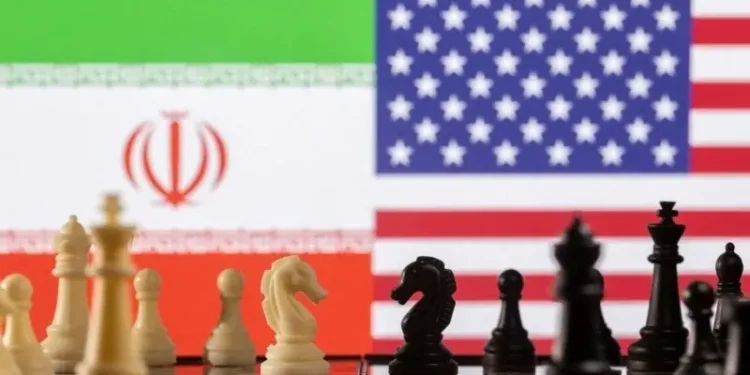
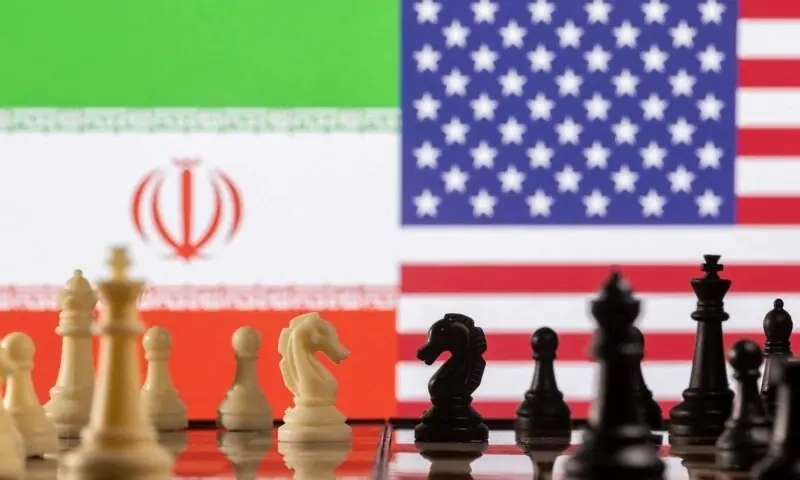
Privately, Iranian officials insist that the difficulty in talks does not lie in the choice of venue, but in what they describe as a “pattern of shifting US positions”.
After weeks of uncertainty, indirect talks between Iran and the United States are set to open tomorrow in Oman’s capital, Muscat. The very survival of the process is notable, even though expectations of a breakthrough remain low.
The road to these talks has been uneven; plans were repeatedly disrupted by military incidents, disputes on the venue and disagreements over the scope of engagement.
At one point, Washington was said to have walked away altogether. Each time, the process was revived. Not because of confidence, but because the alternatives appeared to be far riskier.
From what we know so far, Washington’s attempts to expand the agenda was one of the straws that nearly broke the camel’s back, so to speak.
While Iran had agreed to discuss its nuclear programme – given its stance that it isn’t interested in nuclear weapons – the US instead insisted on putting ballistic missiles, regional proxies and internal governance on the table.
For Tehran, this confirmed long-held suspicions that diplomacy was being used to extract concessions, rather than resolve a specific dispute – in this case, nuclear weapons.
It responded by hardening its position. Talks, Iran said, could only be indirect. They could only be held in Oman and not in Turkiye, as the Americans wanted. And they could only focus on the nuclear issue. Anything beyond that was declared ‘a red line’.
Washington initially resisted, only relenting after sustained intervention by regional actors, particularly from the Gulf region. Their interest was not ideological, but purely pragmatic – any conflict between Iran and US would be fought in their neighbourhood, and they would have to absorb much of the fallout.
On the face of it, President Donald Trump’s team appears to have listened to the regional stakeholders.
US Vice President JD Vance has, meanwhile, expressed frustration over Washington’s inability to directly talk with Iranian Supreme Leader Ayatollah Khamenei, calling Iran “a very weird country to conduct diplomacy with”.
Washington’s calculations
It was Secretary of State Marco Rubio’s recent public remarks, where he insisted that any engagement would need to address Iran’s ballistic missiles, its regional posture and its domestic governance, alongside nuclear issues, that seemingly triggered the disagreement.
American officials had assumed Iran would bend under pressure. The assessment in Washington was that Tehran had been weakened by war, domestic unrest and economic strain.
More importantly, perhaps, Hezbollah’s loss of strength and the fall of Syria’s Assad regime were seen as a weakening of Iran’s influence in the region.
Rubio’s comments, some believe, also pointed to divisions within the US administration itself. While President Trump’s envoy, Steve Witkoff, has been tasked with exploring a diplomatic opening, Rubio articulated a far more expansive and hawkish agenda.
Shashank Joshi, defence editor at The Economist, argues that Iran’s leverage had narrowed sharply. He notes that Tehran long relied on two main instruments: its missile programme and its network of regional allies, from Hamas to Hezbollah.
With those groups weakened, the fall of the Assad regime in Syria and the degradation of its missile capabilities, he says Iran’s position had eroded further. “More recently, Iran’s economic crisis and its response to protests have left it extremely weak and vulnerable … All in all, I think this gives Iran very few options,” he says.
But a diplomatic onlooker based in Islamabad disagrees, saying that Washington’s assumptions had proven to be misplaced.
The Israel factor
Since Oct 7, 2023, regional anxieties have deepened because of Israeli military actions in the region. There is a growing view in the Gulf that an emboldened Tel Aviv would be antithetical to regional stability.
Iranian Supreme Leader Ayatollah Ali Khamenei has also repeatedly warned that a regional conflict would spare no one. That assessment is quietly shared across several Gulf capitals, and in the broader region.
Trita Parsi, executive vice president at the Quincy Institute, notes that while the US may not formally pursue regime change in Iran, Israeli pressure has kept Tehran at the centre of Washington’s security thinking.
The memory of the 12-day war of June 2025 also shaped American calculations. That conflict demonstrated the limits of military action. Iran took damage, but it was not neutralised and retained the capacity to respond and to impose costs.
While the conflict had ended in a stalemate, it reinforced the risks of escalation.
Nevertheless, Israel remains the main proponent of confrontation. It continues to press the US to entangle itself in a military conflict with Iran. Its influence is evident in the steady expansion of American demands. What began as a nuclear concern has gradually widened to missiles and regional proxies.
In Parsi’s assessment, the US will have to make a choice, whether it wants to “pursue Israeli interest or American interest”.
Tehran’s scepticism
Privately, Iranian officials insist that the difficulty does not lie in the choice of venue, but in what they describe as a “pattern of shifting US positions”.
In effect, Iran has refused to engage on the agenda proposed by the US. It has agreed to talk about nuclear issues while rejecting discussion on missiles and regional alliances. These, it said, were integral to national deterrence. The view in Tehran is that any concession would invite further pressure.
Trita Parsi agrees with Iran’s reading, saying: “If the nuclear programme is eliminated, [pressure] will shift to missiles. If the missiles are dealt with, there will be a new excuse”.
In a media interview, Iranian academic Foad Izadi claims that the US was asking Iran to join the Missile Technology Control Regime, which would restrict the ranges of Iranian missiles to 300kms, and to provide detailed data about the nuclear sites that it hit during the 12-day war.
The resistance from Tehran has not only surprised US officials, but it also narrowed Washington’s choices. Escalation remained an option, but an expensive one as a war with Iran would risk regional instability, energy disruption and political costs at home.
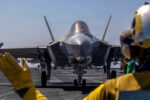
American journalist and author Max Blumenthal notes that “Trump was pushed to deploy a naval Armada to the Persian Gulf, which he has done and now he risks humiliation if he stands down without an attack.”
It was either that, or “attack and risk a total regional war with Iran, activating all of its assets which it had not done [even] during the 12-day war”, Blumenthal says.
The alternative was to step back and accept talks on Iranian terms. For now, the US has chosen the latter.
Oman was accepted as the venue and the agenda appears limited to nuclear issues. Foreign Minister Abbas Araghchi’s public statements suggest no expansion. That may keep the process alive, but it does not resolve the deeper mistrust.
Reasonable expectations
For Iran, the issue is ideological as much as it is political. The current regime itself emerged from the Islamic Revolution, which was a rejection of American dominance. Retreat on that front would hollow out the system’s legitimacy, not an option for Tehran.
Therefore, for Washington, Iran remains a challenge to American influence and to a regional order anchored in US alliances, particularly with Israel. These positions leave little space for reconciliation.
This is why expectations for Muscat remain modest with both sides taking the talks as a tool to manage pressure, but not a path to resolution.
Iran’s approach to the talks is cautious. Officials describe negotiations as a tactical move in a long rivalry and not an endpoint. Expectations are being kept deliberately low. Talks may stall or collapse and Iranian officials, in their private conversations, say they are prepared for all outcomes.
But still, it has taken limited confidence-building measures. Military exercises in the Persian Gulf were postponed, the handling of detainees was eased, and rhetoric on missiles was softened. These steps were calibrated and were intended to reduce tension without signalling vulnerability.
The Americans are also keeping their fingers crossed. Secretary Rubio said, “We’re going to try to find out” if Iranians are ready for a peaceful settlement of the dispute.
Both sides are nevertheless sending negotiators with authority. On the Iranian side, Abbas Araghchi and Ali Larijani enjoy institutional backing. This gives them room to explore limited compromises. On the American side, Steve Witkoff is again leading, this time accompanied by Trump’s son-in-law and adviser Jared Kushner. His presence suggests direct access to President Trump.
This line-up may help avoid procedural delays, but it will not bridge the deeper divide.
The conflict between Iran and the United States is rooted in ideology and geopolitics. It has endured for more than four decades. Diplomacy may slow escalation and possibly reduce chances of miscalculation, but will definitely not end the rivalry.